'%20/%3e%3c/mask%3e%3cpattern%20id='grid'%20width='150'%20height='150'%20patternUnits='userSpaceOnUse'%3e%3crect%20width='150'%20height='150'%20fill='none'%20stroke='%23fff'%20stroke-width='1.8'%20/%3e%3c/pattern%3e%3c/defs%3e%3crect%20width='6000'%20height='4000'%20fill='url(%23grid)'%20mask='url(%23b)'%20/%3e%3c/svg%3e)
'%20/%3e%3c/svg%3e)
'%20/%3e%3c/svg%3e)
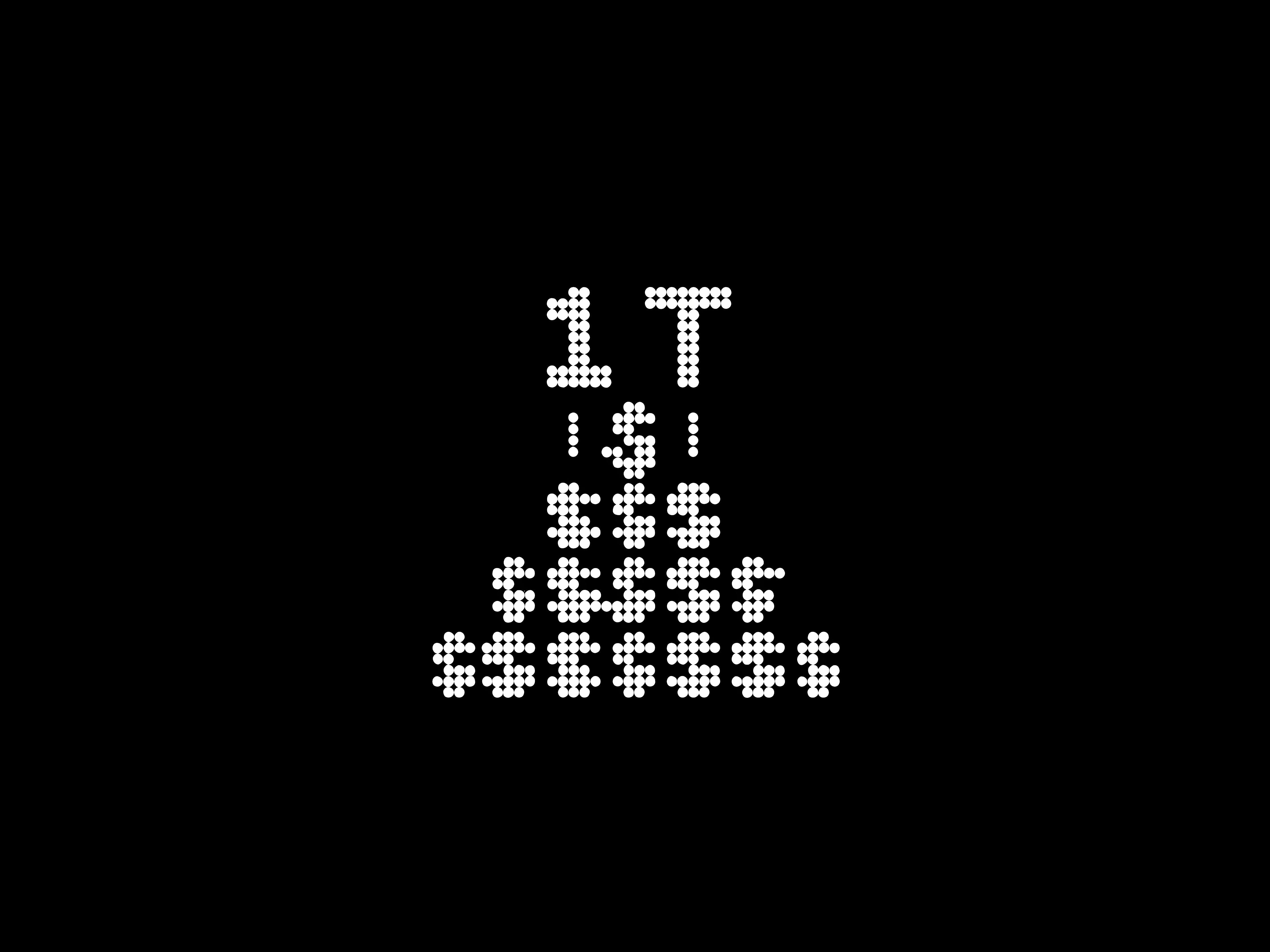
The world is on the cusp of seeing its first individual trillionaire. While names like Elon Musk and Jeff Bezos have toyed with the $200 billion and $300 billion marks, the jump from ‘billion’ to ‘trillion’ is much larger than most people realize. In fact, a trillion is orders of magnitude beyond our daily human comprehension. To truly understand what this means for the global economy and the future of our species, we have to break it down into things we can actually see and feel.
The Time Difference: Seconds vs. Centuries
The easiest way to visualize the difference between a million, a billion, and a trillion is through the lens of time. Time is a universal constant, and our brains are relatively good at understanding it.
- If you have a million seconds, you have about 11 days. (Easy to manage, a long vacation).
- If you have a billion seconds, you have about 31 years. (An entire career, a generation).
- If you have a trillion seconds, you have about 31,700 years.
When we talk about a trillion dollars, we are talking about a sum of money that could pay for the entirety of human civilization several times over. If you started spending $1 million a day when the Great Pyramids of Giza were built, you would still have hundreds of billions of dollars left today. You would have to continue spending $1 million every single day for the next 25,000 years to reach zero.
Stack of Bills: Piercing the Clouds
Most people think of money as digits on a screen, but if you took $1 trillion in physical $100 bills and stacked them on top of each other, the resulting tower would be 678 miles high.
To put that in perspective, that is over 1,300 times higher than the Burj Khalifa, the tallest building in the world. It reaches far beyond the cruising altitude of commercial airliners, into the upper reaches of the atmosphere. If you laid those same $100 bills end-to-end, they would encircle the Earth over 4,000 times. This is the sheer physical gravity of wealth at this scale.
At MadBillion, we use these visualizations to help players understand the transition from ‘Local Tycoon’ to ‘Global Infrastructure Mogul.’ Once you hit the trillion-dollar mark, the world becomes a very small place. Your influence is no longer limited by borders; it is limited only by the scale of your ambition.
The Power of Compounding at the Trillion-Dollar Level
The most terrifying aspect of a trillion-dollar fortune is how fast it grows by doing absolutely nothing. If a trillionaire has their wealth in a diversified portfolio that earns a conservative 5% annual return, they are making $50 billion per year in interest alone.
That is nearly $137 million every single day, or $5.7 million every hour. At this scale, the billionaire can fund entire national-level infrastructure programs using only the interest from their wealth, without ever touching the original trillion. This creates a wealth gap that is mathematically impossible for anyone else to close. In our tycoon simulation, we model this through the ‘Late Game Momentum’—where your assets begin to generate so much value that you can afford to buy entire industries on a whim.
What Can You Buy for $1 Trillion? (Hint: Everything)
A trillionaire doesn’t just buy luxury goods; they buy reality. A trillionaire could literally buy every single professional sports team in the world—every NFL, NBA, MLB, NHL, and major European Soccer team—and only spend about 10% of their fortune.
They could buy the entire residential real estate market of a major global city like New York or London. More impressively, they could personally and fully fund the global transition to 100% renewable energy for the entire planet. They could end world hunger for decades. The first trillionaire will have the power once reserved for major nation-states.
The Rise of the Global Infrastructure Mogul
Experts predict that within the next decade, we will see the first individual hit the 13-digit mark. The path to this wealth likely won’t be through traditional manufacturing, but through the next frontiers: AI, biotechnology, and deep-sea mineral extraction. A single deep-sea mining site could contain more wealth than the current GDP of most countries.
The person who masters the extraction of high-value oceanic resources will be the world’s first trillionaire. This is why our MadBillion endgame moves from city-building to global logistical infrastructure. Are we, as a society, ready for a single human being to have more influence than the United Nations?
Conclusion: Visualizing Your Own Path
Visualize your path to the trillionaire club in the MadBillion shop. It starts with a single smart investment, a few card upgrades, and a vision that extends beyond the next quarter. Start small, think in centuries, and see if you can reach the unthinkable. The trillion-dollar mark is the ultimate level-up. Are you ready to face the terror of that much power?
Sources & Further Reading
Author Note: Dr. Arthur Vance is a Macroeconomist and Data Scientist focused on scalable wealth distributions and systemic economic models.